Can medication alone cure alcohol addiction?
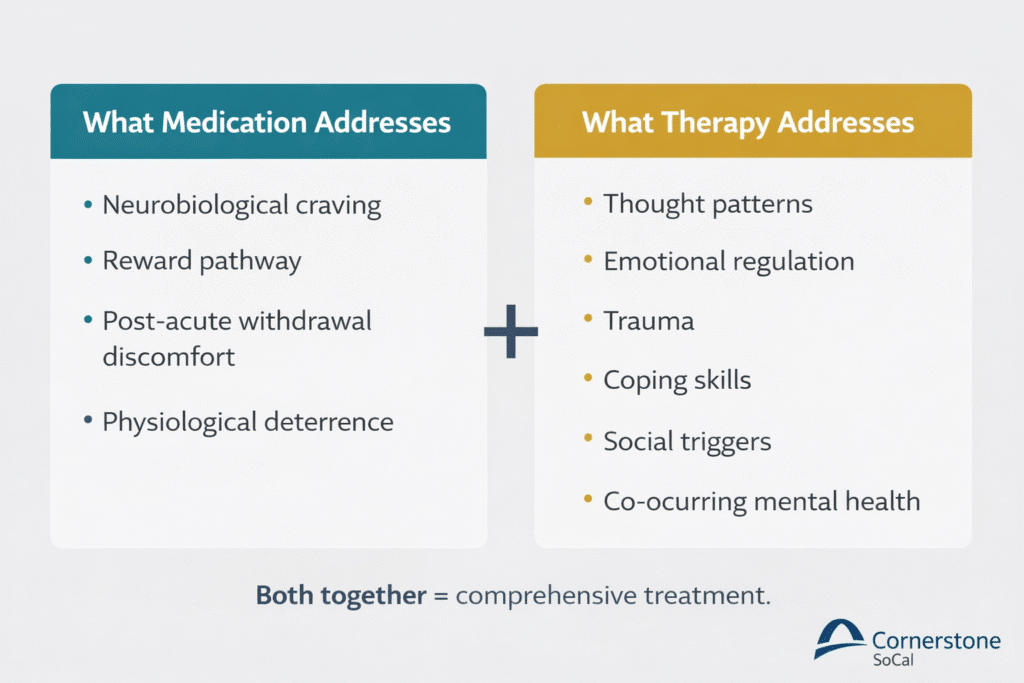
Medication for alcohol addiction - including FDA-approved options such as naltrexone, acamprosate, and disulfiram - can produce meaningful and sometimes dramatic improvements in drinking outcomes. But the honest clinical answer to whether medication alone can cure alcohol addiction is: no. Alcohol use disorder is a complex condition with neurobiological, psychological, behavioural, and social dimensions. Medications address the neurobiological dimension - reducing craving, blocking reward, or creating aversive consequences - but they do not, by themselves, address the thought patterns, emotional regulation deficits, trauma history, social environment, and habitual behaviours that are equally important drivers of addiction and equally important targets for lasting recovery.
What Medications Can and Cannot Do
To understand why medication alone is insufficient, it is useful to be clear about what medications actually do in alcohol use disorder treatment:
- Naltrexone blocks the opioid reward pathway that alcohol uses to generate craving and reinforcement. It reduces the neurobiological pull toward drinking. It does not change the thoughts that justify drinking, the emotional pain that drives self-medication, the social triggers that normalise heavy alcohol use, or the habitual behaviours embedded in years of addiction.
- Acamprosate stabilises glutamate and GABA signalling during early recovery, reducing the neurochemical discomfort that drives relapse in the post-acute phase. It eases early sobriety neurologically but does not develop the psychological skills or emotional resources needed to sustain recovery through life's inevitable stressors.
- Disulfiram creates a pharmacological deterrent against drinking. It works as long as the person is taking it and is motivated not to drink - but it addresses none of the underlying reasons for drinking, and its effects end immediately when the medication is stopped.
Each of these medications addresses a real and important dimension of alcohol addiction. But none of them changes beliefs about alcohol's necessity, resolves unprocessed trauma, teaches emotional regulation skills, repairs relationships damaged by addiction, builds a sober support network, or addresses the co-occurring mental health conditions that drive self-medication in a majority of people seeking treatment. These are the domains of therapy and structured psychosocial support.
What Does the Research Show About Medication Alone vs Combined Treatment?
The clinical trial evidence is clear and consistent: medication combined with behavioural therapy produces significantly better outcomes than medication alone. The COMBINE study - one of the largest clinical trials ever conducted in alcohol addiction - found that naltrexone combined with medical management (brief clinical counselling) produced significantly better outcomes than placebo, but that adding structured behavioural intervention to naltrexone produced the best outcomes of all evaluated conditions. Meta-analyses comparing medication-only approaches to combined medication and therapy approaches consistently favour the combination, across measures of drinking reduction, abstinence rates, treatment retention, and quality of life.
This finding is not unique to alcohol use disorder. The same pattern - combined pharmacological and psychological treatment outperforming either alone - is seen across virtually every chronic condition with both biological and behavioural dimensions, from depression to diabetes management.
Why Do Some People Resist Adding Therapy to Medication?
Some people are more comfortable with the idea of medication than with the idea of therapy - particularly if they see their problem as primarily neurological ("a brain disease") rather than psychological. Others have had negative experiences with therapy or believe it is unlikely to help them. Still others face practical barriers: cost, availability, time. These concerns are understandable and worth taking seriously. But the evidence is clear that therapy substantially improves medication outcomes - and that leaving it out meaningfully increases the risk of relapse when medication is eventually discontinued.
The goal of therapy in alcohol addiction treatment is not to convince people they have moral failings or to produce dramatic emotional breakthroughs. It is to build practical skills - for managing cravings, handling triggers, regulating emotions, making decisions under pressure - that allow the gains produced by medication to be sustained independently over time. Medication supports sobriety while those skills are being built; therapy builds the skills that make sustained sobriety possible when medication is no longer part of the picture.
How Long Should Medication Be Continued?
There is no universal answer to how long medication should be continued - it is a clinical decision made collaboratively between the person and their prescriber, taking into account their progress, their relapse risk, their preferences, and the trajectory of their recovery. What the research does suggest is that longer treatment duration is associated with better outcomes - that stopping medication prematurely, particularly before stable recovery patterns have been established, meaningfully increases relapse risk.
For many people, medication is most valuable in the first year or two of recovery - the period of highest neurological vulnerability and relapse risk. As sobriety becomes more established, as therapy has produced meaningful cognitive and behavioural change, and as a robust support network and sober lifestyle have been built, the clinical need for ongoing medication often decreases. The decision to stop medication should be made thoughtfully, with clinical guidance, and with a clear plan for how sobriety will be maintained after discontinuation.
What Does Comprehensive Treatment Look Like?
Comprehensive alcohol addiction treatment addresses all dimensions of the condition simultaneously - not sequentially, and not piecemeal. It includes medication for the neurobiological component, evidence-based therapy (CBT, motivational interviewing, DBT as appropriate) for the cognitive and psychological components, treatment of co-occurring mental health conditions through integrated dual diagnosis care, peer support for the social and accountability dimensions, and structured aftercare planning to sustain recovery after the intensive phase of treatment ends. At Cornerstone SoCal, this is the model we build every treatment plan around - because we know that half-treatment produces half-results, and our clients deserve the full picture.
In Network With
















What Clients Say About Cornerstone

We are here for you

Danielle Graniello is a healthcare professional from Orange County, California, with more than 14 years of experience supporting patients and families across medical, treatment, and mental health settings. She spent nine years working with individuals affected by traumatic brain injuries and spinal cord injuries, developing a strong foundation in compassionate care, patient support, and complex healthcare needs.