
How do I get help for alcohol addiction?
Getting help for alcohol addiction is one of the most important steps a person can take - and one of the hardest to initiate. The barriers are real: stigma, shame, fear of what treatment involves, uncertainty about where to start, concern about the impact on work and relationships. But the evidence is equally real: treatment works, recovery is achievable, and the earlier help is sought, the better the outcomes tend to be. This page is designed to give you a clear, practical roadmap for taking that first step - wherever you are starting from.
You Do Not Need to Have Hit Rock Bottom
One of the most damaging myths about alcohol addiction is that a person must reach a crisis point - lose their job, their family, their health, or their freedom - before seeking help is warranted. This belief delays treatment unnecessarily and allows more harm to accumulate before care begins. There is no minimum threshold of suffering required to reach out for support. If you are concerned about your relationship with alcohol - or someone else's - that concern alone is a sufficient reason to seek a conversation with a professional. The best time to get help is before things get worse, not after.
Step 1: Start with an Honest Conversation
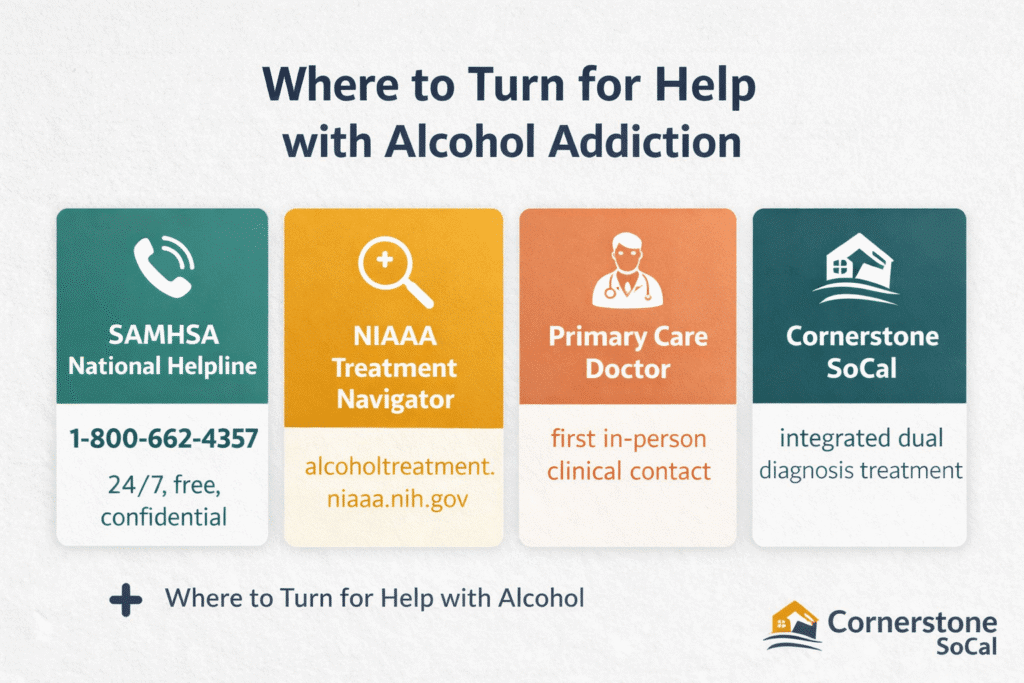
The first practical step is simply talking to someone - and the most accessible starting point for most people is their primary care doctor or a GP. You do not need to have a crisis or a dramatic incident to bring this topic up; you can simply say that you are concerned about your drinking and want to understand what options are available. A doctor can conduct a brief screening assessment, provide information about the level of drinking and its risks, make referrals to appropriate specialist services, and discuss whether medication might be helpful as part of a treatment plan.
Many people find that the anticipation of this conversation is far harder than the conversation itself. Doctors are trained to discuss alcohol use without judgment, and the confidentiality protections of the medical relationship mean that what you share does not go beyond the clinical context without your consent.
Step 2: Contact a Helpline
If you are not ready for a face-to-face conversation, or if you need guidance outside standard clinic hours, free and confidential helplines provide immediate access to knowledgeable support:
- SAMHSA's National Helpline: 1-800-662-4357. Free, confidential, available 24 hours a day, 365 days a year, in both English and Spanish. Provides information, referrals to local treatment facilities, support groups, and community-based organisations. Does not require you to share your name or insurance information.
- NIAAA Alcohol Treatment Navigator: alcoholtreatment.niaaa.nih.gov - an online tool that helps you identify and evaluate local alcohol treatment providers, with guidance on what questions to ask and what to look for.
- Crisis Text Line: Text HOME to 741741 for free, confidential crisis support if you are in immediate emotional distress.
Step 3: Find a Treatment Provider or Programme
Once you have made initial contact - whether through your doctor, a helpline, or direct outreach - the next step is identifying a treatment programme or provider suited to your needs and circumstances. Key considerations include:
- Level of care: Does your situation require medically supervised detox? Residential treatment? An intensive outpatient programme? A clinical assessment (which reputable treatment providers offer at intake) will help determine the appropriate level of care.
- Integrated dual diagnosis treatment: If you are also dealing with depression, anxiety, PTSD, or another mental health condition - which is the case for the majority of people seeking alcohol addiction treatment - look for a provider that offers integrated care addressing both conditions simultaneously.
- Accreditation and credentials: Look for programmes accredited by The Joint Commission (TJC) or CARF International, and with clinical staff credentialed in both addiction treatment and mental health.
- Insurance coverage: Under the Mental Health Parity and Addiction Equity Act, most insurance plans are required to cover alcohol addiction treatment at comparable levels to medical care. Contact your insurer directly or ask the treatment centre to conduct a benefits verification on your behalf.
Step 4: Bring Someone You Trust
If possible, the process of seeking help is easier and more effective when supported by someone you trust - a partner, a family member, a close friend, or a colleague. This person can help with the logistics of making calls and attending appointments, provide emotional support through the uncertainty of the process, and serve as an accountability partner as you begin your recovery journey. You do not have to do this alone - and the research consistently shows that people with strong social support have better recovery outcomes than those who navigate treatment in isolation.
What If the Person Who Needs Help Is Refusing?
If you are reading this on behalf of someone who is not yet ready to seek help, this is one of the most difficult situations families face. Several things are important to know: you cannot force someone to get help unless they present an immediate danger to themselves or others; how you approach the conversation matters enormously; and getting support for yourself - through Al-Anon, family therapy, or CRAFT (Community Reinforcement and Family Training) - is both valuable for your own wellbeing and statistically associated with improving the likelihood that your loved one eventually seeks treatment. At Cornerstone SoCal, we work with families navigating exactly this situation, and we can provide guidance on approaching it constructively.
Reaching Out to Cornerstone SoCal
If you are considering treatment for yourself or someone you care about, we invite you to contact Cornerstone SoCal directly. Our intake team is available to answer questions, conduct an initial assessment, explain our treatment model, and help you understand your insurance options. There is no obligation, no judgment, and no minimum threshold for reaching out. Getting help starts with a single conversation - and we are here to have it with you.
In Network With


















What Clients Say About Cornerstone

We are here for you

Danielle Graniello is a healthcare professional from Orange County, California, with more than 14 years of experience supporting patients and families across medical, treatment, and mental health settings. She spent nine years working with individuals affected by traumatic brain injuries and spinal cord injuries, developing a strong foundation in compassionate care, patient support, and complex healthcare needs.