Does alcohol dependence require different medications than addiction?
Yes - the medication approach for alcohol use disorder differs meaningfully depending on whether the immediate clinical concern is managing active physical dependence (withdrawal) or supporting long-term addiction recovery (relapse prevention). Understanding this distinction helps people and families make sense of why different medications are used at different stages of treatment, and why the medication plan should be coordinated carefully across the full treatment continuum.
Physical Dependence vs Addiction: A Clinical Distinction
Physical dependence and addiction, while closely related and often co-occurring, are distinct clinical states:
- Physical dependence refers specifically to the neurobiological state in which the body has adapted to the presence of alcohol and relies on it to maintain normal functioning. Physical dependence is characterised by tolerance (needing more alcohol to achieve the same effect) and withdrawal symptoms when alcohol is reduced or stopped. It is possible to be physically dependent on alcohol without meeting the full criteria for alcohol use disorder - for example, in a medical context where a person has been prescribed alcohol-containing medications - though this is unusual.
- Alcohol addiction (alcohol use disorder) encompasses physical dependence but also includes the psychological, behavioural, and social dimensions of compulsive, loss-of-control drinking despite harmful consequences. Most people with significant alcohol use disorder are also physically dependent, but addiction involves considerably more than the physical component.
This distinction matters for medication because the medications used to manage acute physical dependence during withdrawal are different from - and often not appropriate for - long-term addiction recovery support.
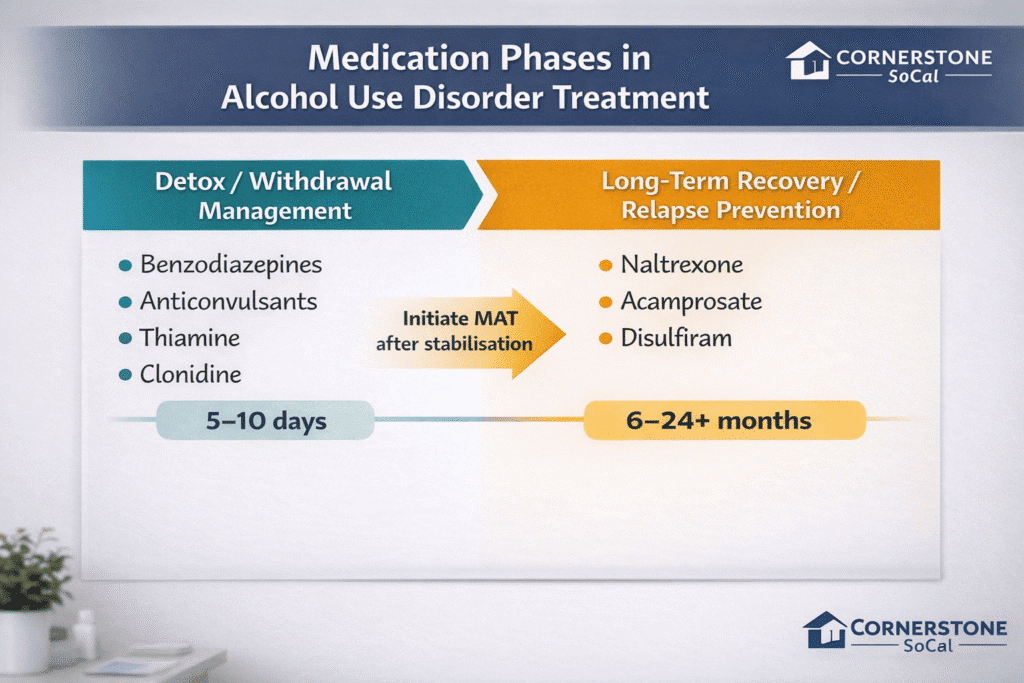
Medications for Managing Physical Dependence: The Detox Phase
When someone who is physically dependent on alcohol stops drinking, the compensatory neurological changes that the brain has made - reduced GABA sensitivity and elevated glutamate activity - are suddenly exposed without alcohol's modulating influence, producing the symptoms of withdrawal. The primary pharmacological goal during this phase is to safely manage this neurological hyperexcitability and prevent its most serious consequences, particularly seizures and delirium tremens.
The medications used during alcohol detox for physical dependence management include:
- Benzodiazepines (diazepam, lorazepam, chlordiazepoxide): The first-line pharmacological treatment for alcohol withdrawal. They enhance GABA activity - replicating alcohol's neurological effect and allowing the brain to restabilise safely. Dosing is typically guided by the CIWA-Ar scale, with medication administered in proportion to actual symptom severity. Benzodiazepines are used for a short, defined period during the withdrawal phase and are then tapered and discontinued - they are not appropriate for ongoing use in people with alcohol use disorder due to significant abuse and dependence potential.
- Anticonvulsants (carbamazepine, valproate, gabapentin): Used in some protocols as alternatives or adjuncts to benzodiazepines, particularly in settings with lower medical supervision or for people with contraindications to benzodiazepines.
- Alpha-2 agonists (clonidine): Used to manage specific autonomic withdrawal symptoms such as elevated blood pressure and heart rate.
- Thiamine (Vitamin B1): Always administered during alcohol detox to prevent Wernicke's encephalopathy - a neurological emergency caused by thiamine deficiency common in heavy drinkers.
These medications manage the acute medical emergency of withdrawal - they are not treatments for addiction, and their use should be time-limited to the detox phase.
Medications for Long-Term Addiction Recovery: Post-Detox MAT
Once the acute withdrawal phase has been safely managed and the person is neurologically stable, the medication focus shifts to supporting long-term sobriety and preventing relapse. This is where the FDA-approved medications for alcohol use disorder - naltrexone, acamprosate, and disulfiram - come into play:
- Naltrexone is typically initiated after full withdrawal stabilisation - generally at least 7 to 10 days after the last drink to ensure alcohol has cleared the system and acute withdrawal has resolved. It then works to reduce craving and the reward value of alcohol, supporting sustained abstinence or significant reduction in drinking over months to years.
- Acamprosate is similarly initiated post-detox, typically once the person has been abstinent for several days. It addresses the protracted neurochemical discomfort of post-acute withdrawal that persists beyond the acute detox phase - particularly important because this lingering dysphoria is a major driver of early relapse in the weeks to months after detox.
- Disulfiram can be initiated once full abstinence is established - typically after at least 12 to 24 hours without alcohol - and acts as a pharmacological deterrent during the high-risk early recovery period.
Why the Transition Between Phases Matters
One of the most clinically important - and most frequently missed - transitions in alcohol addiction treatment is the handoff from detox medications to long-term recovery medications. Many people complete medically supervised detox and leave with no follow-up plan for MAT or therapy, at which point they are neurologically stabilised but entirely unsupported in the face of the psychological and social drivers of addiction. The first weeks after detox are among the highest-risk periods for relapse, and the appropriate initiation of long-term MAT - combined with therapeutic and psychosocial support - during or immediately after the detox phase significantly improves outcomes.
At Cornerstone SoCal, medication management is coordinated across the full treatment continuum - from detox through residential or intensive outpatient care to ongoing recovery support. We do not treat detox and addiction recovery as separate clinical episodes; they are part of a single, continuous process of care, and our medication decisions reflect that integrated approach.
In Network With


















What Clients Say About Cornerstone

We are here for you

Danielle Graniello is a healthcare professional from Orange County, California, with more than 14 years of experience supporting patients and families across medical, treatment, and mental health settings. She spent nine years working with individuals affected by traumatic brain injuries and spinal cord injuries, developing a strong foundation in compassionate care, patient support, and complex healthcare needs.