
How do I talk to someone who has an alcohol addiction?
Talking to someone with alcohol addiction about their drinking is one of the most emotionally loaded and practically challenging conversations a person can have. The stakes are high, the emotional landscape is complex, and the risk of the conversation going badly - or making things worse - can feel paralysing. But the evidence is clear that how these conversations are handled makes a significant difference to outcomes, and that with the right approach, they can plant seeds that genuinely change the trajectory of a person's relationship with alcohol and with treatment.
Before You Start: Prepare Yourself
The quality of the conversation depends significantly on the preparation you bring to it. Before you speak:
- Clarify your intention: Are you trying to express concern? Encourage treatment? Set a boundary? The clearer you are about what you want the conversation to accomplish, the more focused and effective it will be.
- Manage your own emotional state: If you are feeling predominantly angry, contemptuous, or desperate, wait until your emotional state has settled. The most effective conversations come from a place of genuine concern rather than accumulated frustration. Both are understandable - but only one is effective.
- Educate yourself: Understanding that addiction is a brain disease - that the person is not simply choosing to drink over caring about you - changes the emotional register of the conversation and makes it considerably less likely to devolve into accusations and defensiveness.
- Have realistic expectations: The goal of one conversation is rarely "they agree to get help immediately." A more realistic and still valuable goal is to communicate genuine concern, open a door, and plant seeds that may take time to germinate. Lower stakes expectations reduce the pressure that makes these conversations more combustible.
Choosing the Right Time and Place
This cannot be emphasised enough: never attempt this conversation when the person has been drinking. Conversations attempted during intoxication are ineffective, frequently escalate, and are often not remembered accurately. Wait for a sober, calm moment - ideally when neither person is in a hurry, the environment is private, and the relationship between you is in a relatively stable state (not immediately following a major incident when emotions are running highest on both sides).
What to Say: The Core Approach
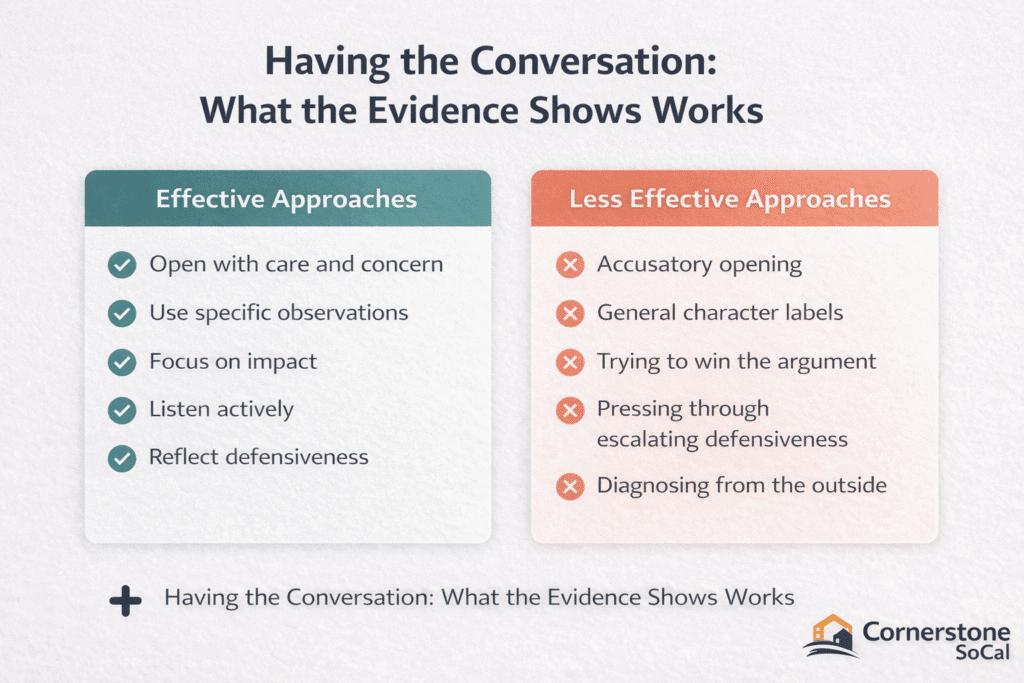
Research on motivational interviewing and family communication in addiction contexts identifies several consistently effective conversational principles:
- Open with care, not accusation: "I care about you and I've been worried about you" is the most effective opening register. It establishes the conversation as an expression of love and concern rather than an intervention or a confrontation.
- Use specific, observable language: Reference specific incidents, patterns, or changes you have noticed rather than general character assessments. "I've noticed you've been drinking every night this week and seemed different this past weekend" is more grounded and harder to argue with than "you have a serious drinking problem."
- Focus on impact, not diagnosis: Describe the impact of the drinking on you, on specific situations, and on your relationship - rather than attempting to diagnose or label the person's condition. "I've been worried about you" and "it affected me when..." are expressions of personal experience that are difficult to dismiss.
- Express confidence in the person, not just concern about the problem: "I know this has been really hard, and I believe you are capable of getting through this with the right support" communicates something important: that you see them as more than their addiction, and that you have not given up on them.
- Ask questions and listen: "How are you really doing?" or "What's been going on for you lately?" can open a door that "you need to stop drinking" closes. People are much more likely to share honestly when they feel genuinely listened to rather than preached at.
Managing Defensiveness and Denial
Defensiveness and denial are the most common initial responses to conversations about alcohol addiction - and they are neurologically normal features of the condition rather than deliberate obstruction. When someone reacts defensively:
- Avoid escalating: Responding to defensiveness with more confrontation reliably produces more defensiveness. Dialling back the intensity - "I hear you, I'm not trying to attack you" - often opens more space than pressing harder.
- Reflect rather than argue: "It sounds like you feel like I'm being unfair" - simply reflecting what you are hearing - validates the person's emotional experience without endorsing their minimisation, and often reduces the temperature of the exchange.
- Don't try to win: The goal is not to win an argument about whether the person has a problem. It is to communicate care and keep the door open for future conversations and eventual action.
- Accept that one conversation is rarely enough: Many people in recovery describe a series of conversations from different people they cared about before they were ready to act. Your conversation may not produce immediate results - but it may be a crucial thread in the larger fabric of what eventually leads them to change.
After the Conversation
How you behave after the conversation matters as much as what was said in it. Follow up - not by constantly re-raising the drinking, but by maintaining the relationship and the connection. Check in, spend time together, and continue to be a visible, caring presence. If the person begins to show openness to the idea of getting help, be ready to assist practically: have information about treatment options available, offer to accompany them to an appointment, or help them call a helpline. Readiness for change can be brief and fragile - having practical support available at the moment it's needed can make the difference between action and another postponement.
At Cornerstone SoCal, we provide guidance to families and friends navigating these conversations, and we can help you prepare for the specific situation you are facing. The conversation you are dreading having may be one of the most important you ever have - and you do not have to figure out how to have it alone.
In Network With


















What Clients Say About Cornerstone

We are here for you

Danielle Graniello is a healthcare professional from Orange County, California, with more than 14 years of experience supporting patients and families across medical, treatment, and mental health settings. She spent nine years working with individuals affected by traumatic brain injuries and spinal cord injuries, developing a strong foundation in compassionate care, patient support, and complex healthcare needs.