How common is alcohol addiction?
Alcohol use disorder is one of the most prevalent health conditions in the United States — and one of the most undertreated. Understanding the scale of the problem matters not only for public health policy, but for reducing the isolation and shame that so often prevent individuals from seeking help. If you are struggling with alcohol, you are far from alone — and the barriers to treatment are not a reflection of the severity of the problem or the availability of effective care.
How Many People in the United States Have Alcohol Use Disorder?
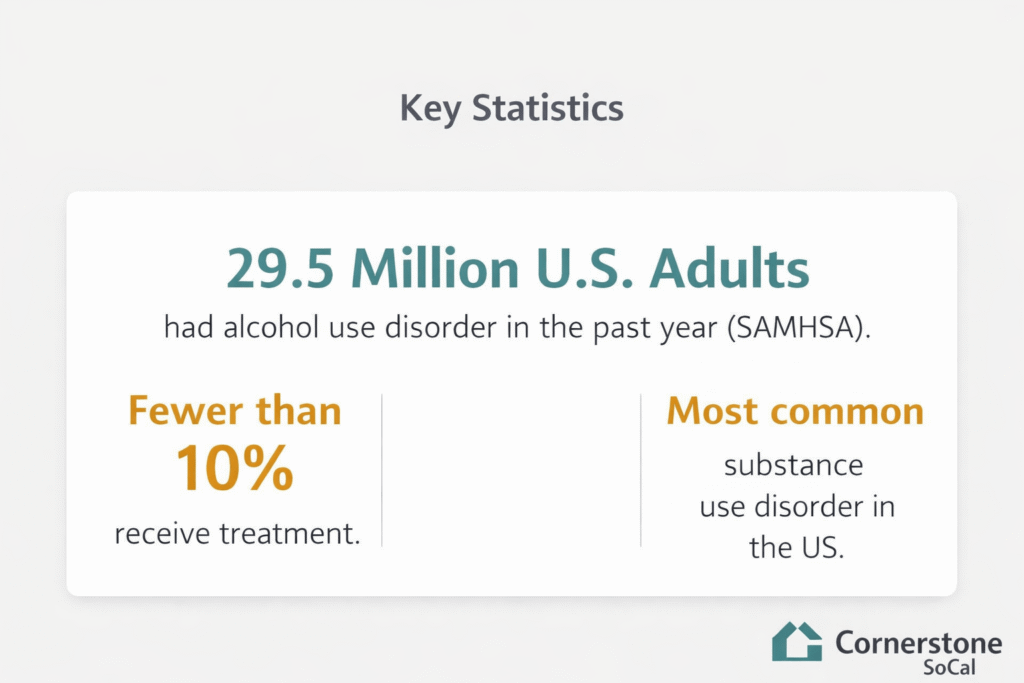
According to the most recent National Survey on Drug Use and Health (NSDUH), conducted by the Substance Abuse and Mental Health Services Administration (SAMHSA), approximately 29.5 million adults aged 18 and older in the United States — about 11.3 percent of the adult population — had alcohol use disorder in the past year. When adolescents (ages 12–17) are included, that figure rises further. These numbers make alcohol use disorder the most common substance use disorder in the country, affecting far more people than opioid use disorder, cannabis use disorder, or any other substance-specific condition.
Globally, the World Health Organization estimates that alcohol is a contributing factor in more than 200 disease and injury conditions, and that alcohol use disorders affect more than 280 million people worldwide. The Global Burden of Disease study consistently ranks alcohol use among the leading contributors to disability-adjusted life years — the combined measure of years lost to illness, disability, and premature death.
What Is the Treatment Gap for Alcohol Addiction?
Despite the scale of the problem, the treatment gap for alcohol use disorder is profound. SAMHSA data consistently shows that fewer than 10 percent of people with alcohol use disorder in the United States receive any form of formal treatment in a given year. Among those who do not receive treatment, the most commonly cited reasons include: not believing the problem is severe enough to warrant treatment; concern about what others will think; cost and lack of insurance coverage; not knowing where to go; and not being ready to stop drinking.
This treatment gap is not a reflection of the ineffectiveness of available treatments — alcohol use disorder has a robust evidence base supporting multiple effective approaches. It is a reflection of the combined effects of stigma, limited awareness, structural barriers to access, and a cultural reluctance to treat addiction with the same urgency as other chronic medical conditions.
Who Is Most Affected by Alcohol Use Disorder?
Alcohol use disorder affects people across all demographics — every age group, gender, ethnicity, and socioeconomic background. However, prevalence is not uniform across all groups:
- Age: Young adults aged 18–25 have the highest rates of alcohol use disorder, though the consequences of long-term addiction accumulate most severely in older adults who have been drinking heavily for decades.
- Gender: Men have historically had higher rates of alcohol use disorder than women — approximately twice as high. However, the gender gap has been narrowing over recent decades, with women's rates of heavy drinking and AUD increasing. Women also tend to experience the physical health consequences of heavy drinking at lower consumption levels than men.
- Mental health: People with co-occurring mental health conditions — particularly depression, anxiety disorders, PTSD, and bipolar disorder — are substantially more likely to develop alcohol use disorder. The majority of people in specialty addiction treatment settings have at least one co-occurring psychiatric condition.
- Trauma history: People with histories of childhood trauma, adverse childhood experiences (ACEs), or adult-onset trauma are at significantly elevated risk.
- Family history: As discussed above, genetic predisposition accounts for approximately half of individual addiction risk.
How Does Alcohol Addiction Compare to Other Substance Use Disorders?
Alcohol use disorder is by a significant margin the most prevalent substance use disorder in the United States. According to SAMHSA data, AUD affects nearly three times as many adults as cannabis use disorder (the second most prevalent), and substantially more than opioid use disorder, stimulant use disorder, or any other specific substance condition. Alcohol is also associated with the highest absolute number of addiction-related deaths — through liver disease, cardiovascular complications, accidents, and alcohol-involved suicide — though the opioid crisis has received significantly more public attention in recent years.
What Do These Statistics Mean for People Struggling with Alcohol?
The most important message these numbers carry is this: if you are struggling with alcohol, you are not unusual, you are not uniquely deficient, and you are not alone. Alcohol use disorder is a common medical condition affecting tens of millions of people — most of whom do not receive help, not because help is unavailable, but because stigma, denial, and structural barriers get in the way. Effective treatment exists. Recovery is achievable. And the earlier someone engages with support, the better the outcomes tend to be. At Cornerstone SoCal, we treat alcohol addiction with the seriousness, compassion, and clinical expertise it deserves — and we have seen what is possible when people receive the care they need.
In Network With


















What Clients Say About Cornerstone

We are here for you

Danielle Graniello is a healthcare professional from Orange County, California, with more than 14 years of experience supporting patients and families across medical, treatment, and mental health settings. She spent nine years working with individuals affected by traumatic brain injuries and spinal cord injuries, developing a strong foundation in compassionate care, patient support, and complex healthcare needs.