
Is alcohol addiction genetic?
Yes — alcohol addiction has a significant genetic component, and family history is one of the strongest individual risk factors for developing alcohol use disorder. Research consistently estimates that genetic factors account for approximately 40 to 60 percent of a person's risk of developing addiction. If a parent, sibling, or close relative has had alcohol addiction, your risk is meaningfully elevated — not because addiction is inevitable, but because you may have inherited neurobiological characteristics that make the brain more susceptible to the effects of alcohol.
Understanding the genetic dimension of alcohol addiction is important not as a reason for fatalism, but as a basis for informed self-awareness and proactive decision-making. Genetics are not destiny — but they are a real and measurable part of the picture.
What Does the Research Show About Heredity and Alcohol Addiction?
The evidence for a genetic contribution to alcohol addiction is robust and drawn from multiple research approaches. Twin studies — which compare addiction rates in identical twins (who share 100% of their DNA) versus fraternal twins (who share approximately 50%) — consistently show higher concordance for alcohol use disorder in identical twins, indicating a substantial heritable component. Adoption studies, which separate the effects of genetics from shared environment, show that children of biological parents with alcohol addiction have significantly elevated risk even when raised in adoptive families without addiction. These findings establish that heredity plays a genuine and independent role — not simply a reflection of growing up in an environment with heavy drinking.
Which Genes Are Involved in Alcohol Addiction Risk?
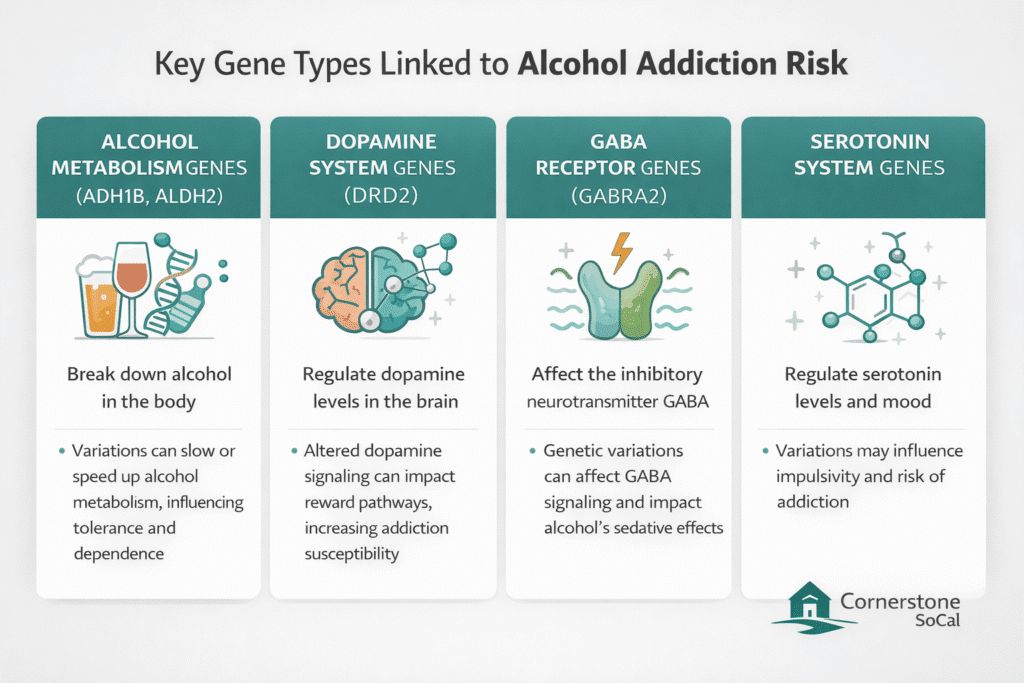
No single gene causes alcohol addiction. Instead, risk is influenced by variants in many genes, each contributing a small to moderate effect. Several gene types have been consistently identified in research:
- Alcohol metabolism genes (ADH1B, ALDH2): These genes control how quickly the body breaks down alcohol. Certain variants produce a faster metabolism that reduces the pleasurable effects of alcohol and increases unpleasant flushing and nausea — naturally reducing the appeal of drinking and lowering addiction risk. Other variants allow alcohol to linger longer, increasing its rewarding effects and addiction potential.
- Dopamine system genes (DRD2, DRD4): Variants in genes controlling dopamine receptor density and function influence how rewarding alcohol feels and how strongly the brain's reward system responds to it. Lower baseline dopamine activity is associated with increased susceptibility to the rewarding effects of alcohol.
- GABA receptor genes (GABRA2): GABA is the primary inhibitory neurotransmitter that alcohol acts on. Variants in GABA receptor genes influence both sensitivity to alcohol and the development of anxiety symptoms — a key driver of self-medication with alcohol.
- Serotonin system genes: Genetic variation in serotonin transporter genes is associated with vulnerability to depression and anxiety — which in turn substantially increases the risk of developing alcohol use disorder as a form of self-medication.
How Much Does Family History Matter?
Having a first-degree relative (parent or sibling) with alcohol addiction approximately triples to quadruples your risk of developing it yourself. This is a significant elevation, but it is not a guarantee. Many people with strong family histories of alcohol addiction never develop the condition, while others with no family history do. The genetic contribution is probabilistic, not deterministic — it shifts the odds, not the outcome.
What family history most powerfully signals is the importance of informed self-awareness. If you have a close relative with alcohol addiction, being mindful of your own drinking patterns, understanding your elevated risk, and seeking support early if concerns arise are all genuinely protective steps.
Is There a Genetic Test for Alcohol Addiction Risk?
Currently, no clinically validated genetic test can reliably predict whether an individual will develop alcohol addiction. The genetic architecture of addiction is complex — involving many genes, each with small effects — and the interaction between genetic predisposition and environmental factors (stress, trauma, mental health, social environment) means that genetic information alone cannot determine individual risk with useful precision. Research in this area is ongoing, and pharmacogenomic approaches to personalising addiction treatment — using genetic information to guide medication choices — are an active and promising area of development.
Does Genetics Reduce Personal Responsibility for Addiction?
Understanding the genetic component of alcohol addiction does not remove personal agency — it contextualises it. People with a genetic predisposition to hypertension are not less responsible for monitoring their blood pressure and managing their diet; they are simply operating with a higher baseline risk that requires more intentional attention. The same logic applies to alcohol addiction. Knowing your risk allows you to make more informed choices, seek support earlier, and engage with treatment more proactively.
What the genetic evidence does firmly remove is the idea that people with alcohol addiction are simply weak-willed or morally deficient. Their brains, for reasons with deep biological roots, respond to alcohol differently — and they deserve care that reflects that reality.
What Should You Do If You Have a Family History of Alcohol Addiction?
If alcohol addiction runs in your family, a few practical steps are genuinely protective. Be honest with your doctor about your family history — it's clinically relevant information that can inform monitoring and early intervention. Be self-aware about your own drinking patterns, and take early warning signs seriously rather than rationalising them. If you drink, doing so moderately and with awareness of your elevated risk is sensible. And if you notice patterns developing that concern you, seek support earlier rather than waiting for a crisis. At Cornerstone SoCal, we work with many individuals who come to us because of a family history of addiction — and early engagement with care consistently produces the best outcomes.
In Network With


















What Clients Say About Cornerstone

We are here for you

Danielle Graniello is a healthcare professional from Orange County, California, with more than 14 years of experience supporting patients and families across medical, treatment, and mental health settings. She spent nine years working with individuals affected by traumatic brain injuries and spinal cord injuries, developing a strong foundation in compassionate care, patient support, and complex healthcare needs.